
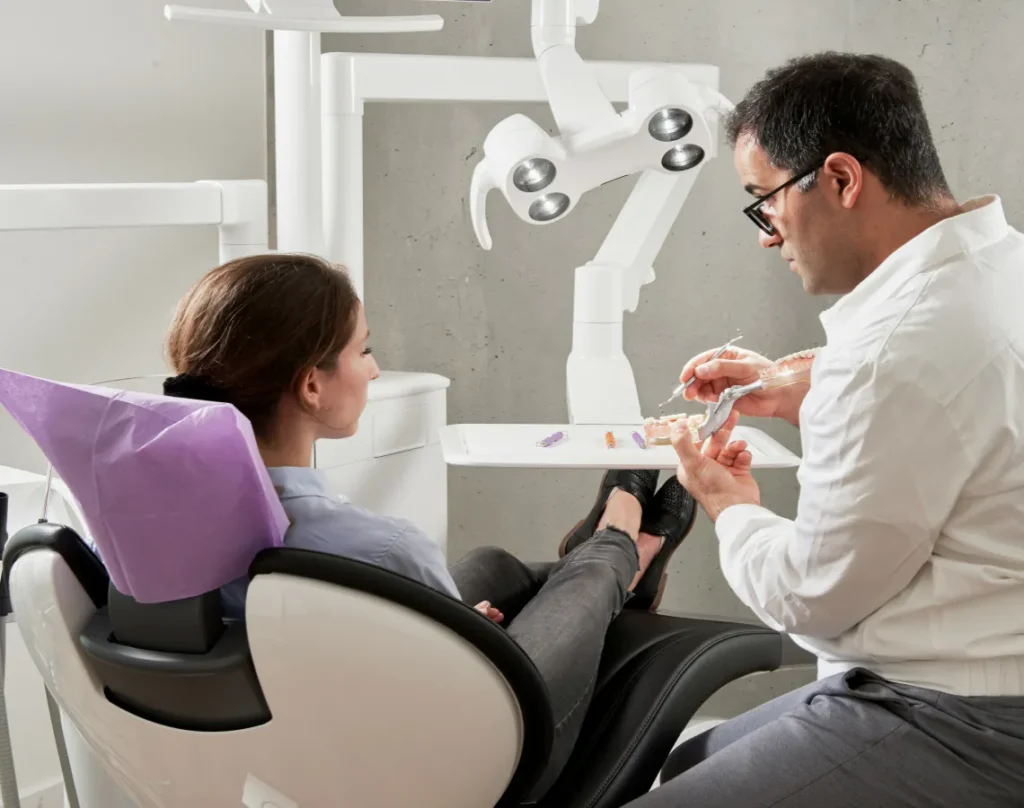
Let us get straight to the point. Yes. Dental implant placement is absolutely considered oral surgery. It is not the same as getting a filling. It is not the same as having a crown fitted. It involves cutting into the gum tissue, working directly with the bone underneath, and placing a titanium post surgically into the jawbone itself. That combination of gum work, bone preparation, and sterile surgical technique puts it squarely in the oral surgery category. No question about it.
But the short answer only takes you so far. If you are thinking about dental implants, or if someone has told you that you need them, there is a lot more worth knowing before you make any decisions. What the surgical process actually looks like. Why it genuinely matters who carries it out. What happens when the case is more complex. And what recovery honestly feels like for most people.
This guide covers all of it. Clearly and without any unnecessary padding.
What Makes Dental Implant Placement Oral Surgery?
Oral surgery covers any procedure that involves cutting, removing, or manipulating the hard and soft tissues of the mouth. Dental implant placement fits that description precisely. Every single step of it. Here is what actually happens during the procedure. An incision is made in the gum tissue to expose the jawbone sitting underneath. The bone is carefully prepared using specialist surgical drills. A titanium implant post, which takes the place of the root of the missing tooth, is placed directly into the prepared bone at a very carefully calculated angle and depth. The gum tissue is then sutured back into position over the top of the implant. The whole thing happens under local anaesthetic in a sterile surgical environment.
That is not a routine dental visit. Not even close. It requires specific surgical training, the right specialist equipment, and real clinical judgement about bone anatomy, nerve positions, and tissue management. That level of knowledge goes considerably beyond what general dentistry covers.
The classification as oral surgery comes directly from the invasive nature of the procedure itself. Manipulating gum tissue and working with the underlying bone structure in a sterile surgical setting is what oral surgery is. Dental implant placement is exactly that.
The Full Dental Implant Process – Step by Step
Most of the anxiety people feel about dental implants comes from simply not knowing what is going to happen. Understanding the full process from the very beginning to the very end removes most of that uncertainty.
Assessment and planning. Nothing surgical happens until a thorough assessment has been completed. That means a full clinical examination, a review of your dental and medical history, and specialist imaging. A panoramic jaw X-ray gives a broad overview of the bone and surrounding structures. A CBCT scan, which is a three-dimensional cone beam scan, goes considerably further. It maps bone volume, nerve locations, sinus cavities, and the precise anatomy of the jaw in three dimensions. That level of detail is what allows the surgical team to plan implant placement accurately before a single instrument is picked up.
Something worth knowing. Around 30 to 40 percent of patients need some form of preparatory treatment before an implant can actually be placed. Active gum disease needs to be brought under control first. Bone loss, which is very common after a tooth has been extracted, may need bone grafting to create the right foundation for an implant to sit in. These are not complications. They are a completely normal part of thorough planning for patients who need them.
Implant placement. This is the surgical procedure itself. Under local anaesthetic, the gum is carefully opened, the bone is prepared, and the titanium implant post goes in. The gum is then sutured closed over it. For most people, this takes somewhere between thirty minutes and an hour. The exact time depends on how many implants are being placed and whether any bone work is needed at the same time.
Osseointegration. After the implant is placed, it goes through a process called osseointegration. This is where the titanium post gradually fuses with the surrounding jawbone through a natural biological process. It takes time. Usually between two and six months. During that period, the implant becomes structurally integrated into the bone in a way that gives it the stability and strength that makes it so effective as a long-term tooth replacement. There is no shortcut for this stage. It just takes the time it takes.
Abutment placement. Once osseointegration is confirmed and the implant is fully integrated, a second minor procedure takes place. The gum is reopened to expose the top of the implant and a small connector piece called an abutment is attached. This is the component that the final crown or prosthetic tooth will connect to.
Crown or prosthetic fitting. The last stage is fitting the crown or prosthetic tooth onto the abutment. This is a restorative dental step rather than a surgical one. The end result is a replacement tooth that looks, feels, and works like a natural one. For most patients, that final result genuinely exceeds their expectations.
Why Does It Matter Who Places Your Implant?
This is the question patients do not always think to ask. But they absolutely should. Dental implant placement is carried out by practitioners with advanced surgical training. The level of training varies significantly depending on who is doing the work. And that variation has very real consequences for outcomes. Oral and maxillofacial surgeons are among the most comprehensively trained implant surgeons available anywhere. They have completed dual qualifications in both medicine and dentistry. Then they go through years of specialist postgraduate surgical training covering the full range of conditions affecting the mouth, jaw, and face. Implant placement and all the complex pre-implant surgical work like bone grafting and sinus lifts fall squarely within their trained scope. They are the first choice for complex cases. Cases involving extensive bone grafting, sinus involvement, or multiple extractions and implants being placed in a single treatment plan.
The quality and predictability of implant outcomes is directly tied to the surgical skill, the training, and the clinical judgement of the person doing the procedure. That is not a vague statement. It is a clinical reality. For straightforward single implant cases in patients with adequate bone and healthy gums, a dental specialist with proper implant training can achieve excellent results. For anything more involved, the additional training and surgical capability of an oral and maxillofacial surgeon provides a meaningful clinical advantage that matters.
At HI Oral Surgery, dental implants are placed by Dr Hassan-Ali Ismail. He is a GDC registered specialist oral surgeon with extensive experience in complex oral surgical procedures. His background in oral and maxillofacial surgery means he handles both the straightforward placements and the more demanding cases involving bone grafting, sinus involvement, and full arch restorations with multiple implants.
What About Bone Grafting and Sinus Lifts?
These procedures come up regularly in implant treatment planning. They are worth understanding properly so nothing catches you off guard.
Bone grafting. When a tooth is extracted, the bone surrounding the socket starts to resorb fairly quickly. Over months and years, that bone loss can become significant. If there is not enough bone volume or density to properly support an implant, bone grafting is needed to restore the foundation. Graft material is placed at the site. The body incorporates it into the existing bone over a period of months. Once sufficient bone has developed, implant placement can proceed. Bone grafting is a surgical procedure in its own right and it adds time to the overall treatment timeline.
Sinus lift. The upper back teeth sit close to the maxillary sinuses. These are air-filled cavities inside the skull. When upper back teeth are lost, the sinus can gradually expand downward into the space where the tooth roots used to be. That leaves insufficient bone depth between the gum line and the sinus floor for an implant to sit in safely. A sinus lift procedure addresses this by carefully elevating the sinus membrane and placing graft material in the space beneath it. After that graft heals, there is adequate depth for implant placement to happen properly. A related procedure is the closure of sinus communication, which addresses any opening that may develop between the mouth and the sinus following an extraction, particularly of upper back teeth.
Both of these procedures are well within the scope of an oral and maxillofacial surgeon. They are carried out routinely as part of comprehensive implant planning for the patients who need them.
What Does Recovery From Dental Implant Surgery Look Like?
Most people find recovery from implant placement considerably more manageable than they were expecting going in. The first week is the most noticeable part of the whole recovery. Some swelling is expected. It typically peaks somewhere around forty-eight to seventy-two hours after the procedure and then gradually reduces. Discomfort is usually described as a dull, deep aching feeling rather than anything sharp. Paracetamol or ibuprofen taken regularly and as directed manages it well for most patients. Some bruising around the jaw or cheek is possible, particularly after more involved procedures.
A soft food diet is the rule for the first one to two weeks. Soups, yogurt, mashed potato, scrambled eggs, and similar soft options are ideal. Hard, crunchy, and chewy foods should be avoided completely during this period. Gentle oral hygiene is important throughout. Careful brushing around the surgical site and using any prescribed antimicrobial rinse keeps the area clean without disrupting the healing underneath. Most patients are back to their normal daily routine within a day or two of the procedure. Strenuous exercise should wait for the first few days. Raising blood pressure through physical exertion can worsen swelling or interfere with the early stages of healing.
For patients who feel anxious about the surgical experience, sedation is available. Intravenous sedation provides a deeper level of relaxation. Inhalation sedation is a lighter option. Both are used alongside local anaesthetic so the surgical area remains completely numb throughout. Full aftercare guidance is provided to every patient before they leave, covering exactly what to do and what to avoid during recovery.
Are Dental Implants Actually Worth It?
This is the question sitting underneath almost every implant enquiry. And the honest answer is yes. For the right patient in the right circumstances. Dental implants are the only tooth replacement option that actually addresses the root of the problem rather than just the visible part. A bridge requires grinding down the healthy teeth on either side to support the restoration. Dentures sit on top of the gum and can move around. Neither of those options does anything about the bone loss that continues after a tooth is extracted. An implant replaces the tooth root itself. That stimulates the jawbone in the same way a natural root would, preventing or at least significantly slowing the bone resorption that destabilises adjacent teeth over time and gradually changes the shape of the face as bone volume reduces. The functional outcomes are genuinely excellent. An implant-supported crown looks like a natural tooth. It feels like one. It functions like one. Patients eat normally, speak normally, and look after their oral hygiene the same way they would with their natural teeth. With proper care, implants last for decades. That makes them the most cost-effective long-term tooth replacement option available when looked at over a full lifetime of dental care.
Who Is Actually a Candidate for Dental Implants?
Most healthy adults with adequate bone and healthy gum tissue are suitable candidates. Here is what is looked for. Sufficient bone volume and density in the jaw to support the implant properly. This is assessed through clinical examination and CBCT scanning. Healthy gum tissue with no active periodontal disease present. Gum disease has to be treated and fully stabilised before implants can be placed. Good general health overall. Certain medical conditions and some medications affect healing and how well osseointegration progresses. A complete medical history review is always part of the assessment process.
Non-smokers, or patients who are willing to stop smoking around the time of the procedure. Smoking significantly raises implant failure rates and slows the entire healing process in a measurable way. Patients who do not immediately tick every box may still be good candidates after preparatory treatment. Bone grafting, gum disease treatment, and other preparatory procedures can create exactly the conditions needed for successful implant placement in patients who would otherwise not qualify straight away.
Final Thought
Are dental implants considered oral surgery? Yes. Definitively and without any qualification. The surgical placement of a titanium post into the jawbone, with everything that surrounds it including bone preparation, tissue management, sterile technique, and post-operative healing, falls completely within the definition of oral surgery. That is simply what it is.
That classification matters for two very practical reasons. First, it means the procedure needs to be carried out by someone with proper surgical training. Not just any dental practitioner who has attended a weekend course. Second, it means the assessment, the planning, and the aftercare around it need to meet the standard that any surgical procedure rightly demands.
When implants are placed by a specialist with the right training and genuine experience, in a properly equipped and sterile clinical environment, with thorough imaging and planning done beforehand, the outcomes are consistently excellent. The long-term success rates are very high. The patient satisfaction is real.
At HI Oral Surgery, appointments for dental implant assessment are available within a week of referral at multiple locations across Yorkshire and the Midlands. Use the referral form or the contact page to get in touch and find out whether implants are the right option for your specific situation.
Frequently Asked Questions
Are dental implants considered oral surgery?
Yes. Dental implant placement involves incising the gum tissue, preparing the jawbone, and placing a titanium post surgically into the bone. It requires specialist surgical training, a sterile environment, and clinical expertise in bone and soft tissue management. All of that places it firmly and definitively in the oral surgery category.
Who should place dental implants?
Dental implants should be placed by a practitioner with appropriate specialist surgical training. Oral and maxillofacial surgeons are among the most comprehensively trained for complex implant cases, including those involving bone grafting, sinus lifts, and multiple implants. For straightforward cases, a dental specialist with dedicated and proven implant training can also achieve excellent results.
Does dental implant surgery hurt?
Not during the procedure itself. Local anaesthetic numbs the area completely before any surgery begins. You feel pressure and some movement but not pain. Some discomfort after the anaesthetic wears off is completely normal and is managed well with standard over-the-counter pain relief. Most patients find it considerably less uncomfortable than they were expecting.
How long does dental implant recovery take?
Most patients feel well enough to return to their normal daily activities within one to two days. Significant discomfort typically resolves within three to five days. A soft food diet is recommended for one to two weeks. Full osseointegration of the implant into the bone takes between two and six months depending on individual healing rates and the complexity of the case.
Can I have sedation for dental implant surgery?
Yes. Sedation is available for patients who feel anxious about the procedure. Intravenous sedation provides a deep level of relaxation throughout. Inhalation sedation is a lighter option that suits many patients well. Both are used alongside local anaesthetic so the surgical area remains completely numb and pain-free throughout the procedure.
What happens if I do not have enough bone for an implant?
Bone grafting can restore adequate bone volume in most cases. A CBCT scan assesses exactly how much bone is present and where grafting is needed. After the graft heals, implant placement proceeds in the normal way. Sinus lifts specifically address bone deficiency in the upper jaw close to the maxillary sinus. Both procedures are routine and well within the scope of an experienced oral and maxillofacial surgeon.
Are dental implants available on the NHS?
Dental implants are not routinely available on the NHS. They are classed as a specialist and high-cost treatment. NHS funding is only available in very specific clinical circumstances such as severe facial trauma, oral cancer treatment, or certain congenital conditions where other replacement options are genuinely not suitable. For most patients, private treatment is the practical and realistic route to accessing dental implants.
